
While this is an opinion article, this is what feels as a thread in 2026 research and practice.
The creative arts therapies are evolving rapidly. Across art therapy, music therapy, dance/movement therapy, drama therapy, and expressive arts therapies, several deeper shifts are becoming visible in research, training, and clinical practice. These trends are not simply about new techniques; they reflect changing ideas about how healing happens, what counts as knowledge, and how therapists understand difference, embodiment, and creativity.
1. From the Arts as Intervention to the Arts as a Distinct Way of Knowing
For many years, creative arts therapies have understandably sought legitimacy by demonstrating outcomes familiar to psychology and medicine: reductions in depression, anxiety, trauma symptoms, pain, or behavioural difficulties.
That evidence was essential in proving that arts therapies do well in aleviating symptoms and having positive outcomes, in a mental health system when psychology and other therapies came with evidence. At this moment, we have evidence through research and practice and researchers continue to produce it.
But a deeper question is becoming increasingly important: what happens through image, movement, music, rhythm, metaphor, improvisation, play, and aesthetic experience that cannot simply be reproduced through verbal psychotherapy?
This moves the field from asking only “Does art therapy work?” toward asking “What is specifically therapeutic about making art when whitnessed by an arts therapist?”
Research on mechanisms of change in the creative arts therapies has already identified processes such as embodiment, concretization, symbolism and metaphor, active engagement, creativity, non-verbal expression, perspective taking, and the therapeutic relationship as possible pathways through which change occurs (de Witte et al., 2021).
More recent research continues this movement by examining aesthetic experience, creative engagement, identity, flow, relational synchrony, and the interaction between biological, psychological, and cultural processes. He and Zhang's (2026) recent neuro-psycho-cultural model, for example, explicitly describes art therapy as working through multiple interacting mechanisms rather than a single psychological pathway.
This distinction matters professionally. If the arts are treated merely as attractive tools added to psychotherapy, one can claim that creative arts therapies are not distinctive and can be incorporated into other approaches. But arts therapies are more than a tool that can be added to a psychotherapy approach. The emerging challenge is therefore to build evidence without reducing arts therapies to verbal psychotherapy conducted with art materials.
The arts can allow something different to happen. An image can contain contradictory meanings simultaneously. Improvisation can permit something to emerge before it has been cognitively organized. Movement can make an interpersonal pattern visible before it can be named. Music can organize emotional experience temporally and relationally. Drama can allow a person to occupy several positions rather than having to decide immediately which one is “true.”
The growing interest in mechanisms of change may therefore represent something larger: a return to the arts themselves as forms of psychological knowledge and expression, different but as valuable as language. The mechanism of change is also related to using these creative ways of expression while being held and witnessed by the arts therapist.
Key references:
de Witte, M., Orkibi, H., Zarate, R., Karkou, V., Sajnani, N., Malhotra, B., Ho, R. T. H., Kaimal, G., Baker, F. A., & Koch, S. C. (2021). From therapeutic factors to mechanisms of change in the creative arts therapies: A scoping review. Frontiers in Psychology, 12, 678397.
He, J., & Zhang, Z. (2026). Healing potential of art therapy: A narrative review of neuro-psycho-cultural mechanisms in mental health. Frontiers in Psychology, 16, 1662772. https://doi.org/10.3389/fpsyg.2025.1662772
2. Neuroscience Is Moving from Justification to Clinical Translation
While the mechanisms of change through art, when the space is safe are increasingly researched through different emergent domains of neuroscience, e.g. neuroaesthetics, the connection between arts therapies and neuroscience is becoming increasingly sophisticated.
Earlier discussions often focused on demonstrating that art-making, music, or movement affects the brain. Current work is moving toward a more practical, reverse question: How can neuroscience actually inform art therapy clinical decision-making?
The relationship between neuroscience and the creative arts therapies continues to deepen, but the most important development is a shift in emphasis. The current direction is more clinically useful: How can neuroscience actually inform therapeutic decisions, creative processes, and the way practitioners understand trauma, regulation, memory, sensory experience, and change?
Recent literature increasingly brings together areas such as neuroplasticity, sensory processing, emotional regulation, stress physiology, memory, reward, attention, embodied cognition, and interpersonal synchrony. On the other hand, theories that did not find solid ground in neuroscience start to slowly fade.
He and Zhang (2026), for example, propose a neuro-psycho-cultural framework for understanding art therapy. Rather than reducing the therapeutic process to one neural mechanism, they connect brain-based processes with emotional regulation, identity, flow, culture, and interpersonal experience. Their work reflects a broader movement away from simplistic claims such as “art activates this part of the brain” and toward a more layered understanding of how biological, psychological, relational, and cultural processes interact.
This movement toward clinical translation is strongly represented in the work of Dr. Juliet King, who has spent much of her career building bridges between art therapy, trauma, and neuroscience. Her influential edited volume Art Therapy, Trauma, and Neuroscience: Theoretical and Practical Perspectives (King, 2016; King & Strang, 2026) brought together research, theory, and clinical practice to explore how neuroscience can deepen the understanding and treatment of trauma within art therapy and incorporating newer understandings of trauma, resilience, neuroplasticity, and culturally responsive practice.
Her current work takes this translation even further. Rather than leaving neuroscience within academic literature, King has focused on making it usable by practicing therapists. In 2026, she published work describing a neuroscience-informed knowledge-translation toolkit designed to support trauma-informed art therapy practice. This same commitment is also visible in Brain Palette™, a practical framework developed to help therapists integrate neuroscience-informed thinking into clinical work.
This emerging direction, therefore, is not simply art therapy plus neuroscience. It is a more sophisticated integration in which neuroscience becomes one layer of understanding alongside aesthetic, relational, embodied, cultural, and subjective experience.
This distinction matters. An image is simultaneously sensory, symbolic, emotional, autobiographical, relational, cultural—and biological. Neuroscience can enrich our understanding of that complexity, but it should not replace it or minimise the role of clinical art therapy in activating these neural pathways, that are still partially understood.
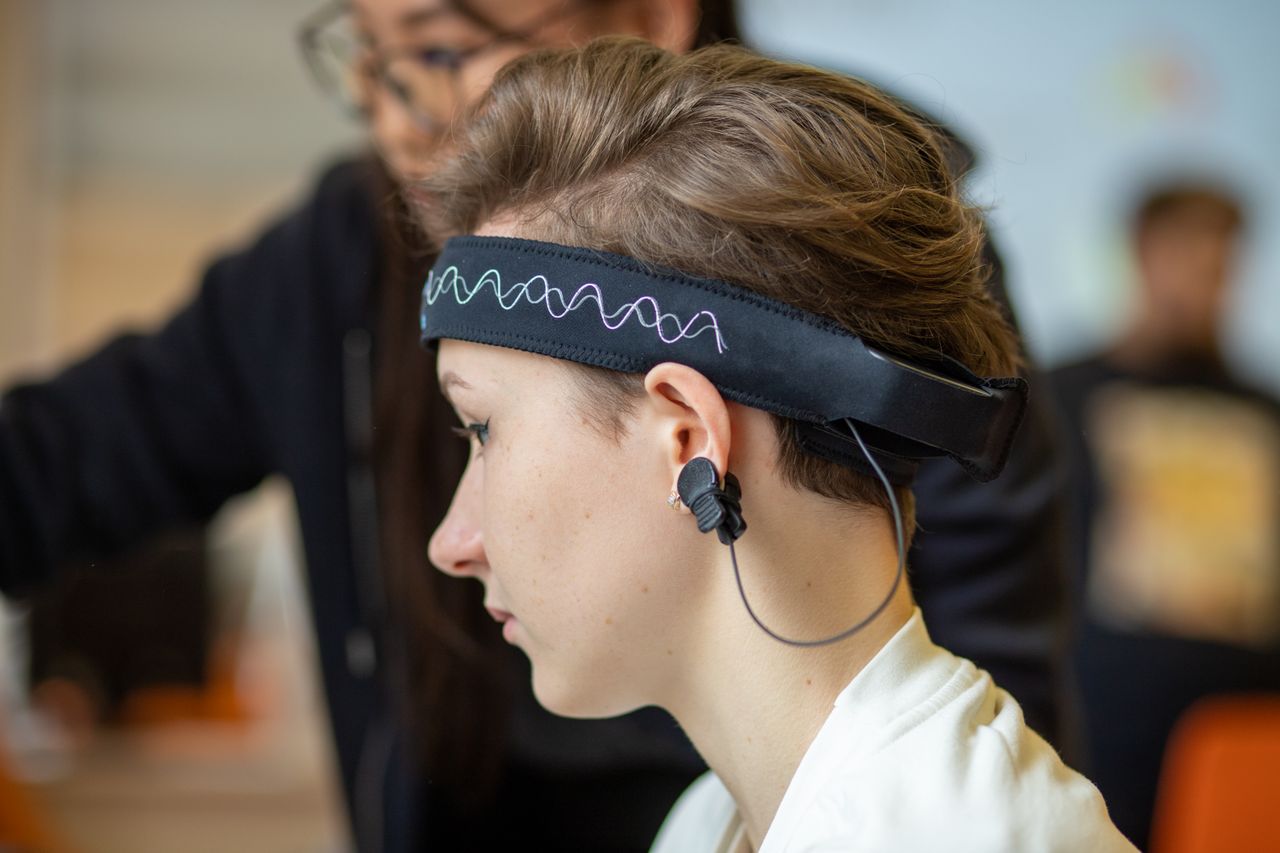
Another important shift is that arts therapies research is increasingly using neuroscientific methods themselves, rather than relying only on psychological measures or theoretical interpretations. Studies are beginning to incorporate tools such as EEG, fMRI, physiological monitoring, and other measures of neural and autonomic activity to examine what happens during art-making, music, movement, and other creative therapeutic processes. This allows researchers to explore not only whether an intervention is effective, but also how creative engagement may influence attention, emotion regulation, stress responses, memory, connectivity, and embodied experience.
This development marks a move from using neuroscience mainly as an explanatory framework toward making it part of the research methodology of the creative arts therapies. At the same time, it raises an important challenge: neuroscientific data can enrich our understanding of therapeutic processes, but it should remain integrated with psychological, relational, cultural, and aesthetic perspectives rather than becoming the sole measure of what is meaningful or therapeutic.
Key References
He, J., & Zhang, Z. (2026). Healing potential of art therapy: A narrative review of neuro-psycho-cultural mechanisms in mental health. *Frontiers in Psychology, 16*, 1662772. [https://doi.org/10.3389/fpsyg.2025.1662772](https://doi.org/10.3389/fpsyg.2025.1662772)
King, J. L. (Ed.). (2016). Art therapy, trauma, and neuroscience: Theoretical and practical perspectives. Routledge.
King, J. L., & Strang, C. E. (Eds.). (2026). Art therapy and the neuroscience of trauma: Theoretical and practical perspectives. Routledge.
King, J. L. (2026). A knowledge translation toolkit to support trauma-informed neuroscience in art therapy practice. *The Arts in Psychotherapy*.
Vaisvaser, S., et al. (2026). Neuroscience-informed creative group therapy, trauma, and resilience. *Journal of Personalized Medicine*.
[https://www.mdpi.com/2075-4426/16/3/128](https://www.mdpi.com/2075-4426/16/3/128)
The creative arts therapies are evolving rapidly. Across art therapy, music therapy, dance/movement therapy, drama therapy, and expressive arts therapies, several deeper shifts are becoming visible in research, training, and clinical practice. These trends are not simply about new techniques; they reflect changing ideas about how healing happens, what counts as knowledge, and how therapists understand difference, embodiment, and creativity.
1. From the Arts as Intervention to the Arts as a Distinct Way of Knowing
For many years, creative arts therapies have understandably sought legitimacy by demonstrating outcomes familiar to psychology and medicine: reductions in depression, anxiety, trauma symptoms, pain, or behavioural difficulties.
That evidence was essential in proving that arts therapies do well in aleviating symptoms and having positive outcomes, in a mental health system when psychology and other therapies came with evidence. At this moment, we have evidence through research and practice and researchers continue to produce it.
But a deeper question is becoming increasingly important: what happens through image, movement, music, rhythm, metaphor, improvisation, play, and aesthetic experience that cannot simply be reproduced through verbal psychotherapy?
This moves the field from asking only “Does art therapy work?” toward asking “What is specifically therapeutic about making art when whitnessed by an arts therapist?”
Research on mechanisms of change in the creative arts therapies has already identified processes such as embodiment, concretization, symbolism and metaphor, active engagement, creativity, non-verbal expression, perspective taking, and the therapeutic relationship as possible pathways through which change occurs (de Witte et al., 2021).
More recent research continues this movement by examining aesthetic experience, creative engagement, identity, flow, relational synchrony, and the interaction between biological, psychological, and cultural processes. He and Zhang's (2026) recent neuro-psycho-cultural model, for example, explicitly describes art therapy as working through multiple interacting mechanisms rather than a single psychological pathway.
This distinction matters professionally. If the arts are treated merely as attractive tools added to psychotherapy, one can claim that creative arts therapies are not distinctive and can be incorporated into other approaches. But arts therapies are more than a tool that can be added to a psychotherapy approach. The emerging challenge is therefore to build evidence without reducing arts therapies to verbal psychotherapy conducted with art materials.
The arts can allow something different to happen. An image can contain contradictory meanings simultaneously. Improvisation can permit something to emerge before it has been cognitively organized. Movement can make an interpersonal pattern visible before it can be named. Music can organize emotional experience temporally and relationally. Drama can allow a person to occupy several positions rather than having to decide immediately which one is “true.”
The growing interest in mechanisms of change may therefore represent something larger: a return to the arts themselves as forms of psychological knowledge and expression, different but as valuable as language. The mechanism of change is also related to using these creative ways of expression while being held and witnessed by the arts therapist.
Key references:
de Witte, M., Orkibi, H., Zarate, R., Karkou, V., Sajnani, N., Malhotra, B., Ho, R. T. H., Kaimal, G., Baker, F. A., & Koch, S. C. (2021). From therapeutic factors to mechanisms of change in the creative arts therapies: A scoping review. Frontiers in Psychology, 12, 678397.
He, J., & Zhang, Z. (2026). Healing potential of art therapy: A narrative review of neuro-psycho-cultural mechanisms in mental health. Frontiers in Psychology, 16, 1662772. https://doi.org/10.3389/fpsyg.2025.1662772
2. Neuroscience Is Moving from Justification to Clinical Translation
While the mechanisms of change through art, when the space is safe are increasingly researched through different emergent domains of neuroscience, e.g. neuroaesthetics, the connection between arts therapies and neuroscience is becoming increasingly sophisticated.
Earlier discussions often focused on demonstrating that art-making, music, or movement affects the brain. Current work is moving toward a more practical, reverse question: How can neuroscience actually inform art therapy clinical decision-making?
The relationship between neuroscience and the creative arts therapies continues to deepen, but the most important development is a shift in emphasis. The current direction is more clinically useful: How can neuroscience actually inform therapeutic decisions, creative processes, and the way practitioners understand trauma, regulation, memory, sensory experience, and change?
Recent literature increasingly brings together areas such as neuroplasticity, sensory processing, emotional regulation, stress physiology, memory, reward, attention, embodied cognition, and interpersonal synchrony. On the other hand, theories that did not find solid ground in neuroscience start to slowly fade.
He and Zhang (2026), for example, propose a neuro-psycho-cultural framework for understanding art therapy. Rather than reducing the therapeutic process to one neural mechanism, they connect brain-based processes with emotional regulation, identity, flow, culture, and interpersonal experience. Their work reflects a broader movement away from simplistic claims such as “art activates this part of the brain” and toward a more layered understanding of how biological, psychological, relational, and cultural processes interact.
This movement toward clinical translation is strongly represented in the work of Dr. Juliet King, who has spent much of her career building bridges between art therapy, trauma, and neuroscience. Her influential edited volume Art Therapy, Trauma, and Neuroscience: Theoretical and Practical Perspectives (King, 2016; King & Strang, 2026) brought together research, theory, and clinical practice to explore how neuroscience can deepen the understanding and treatment of trauma within art therapy and incorporating newer understandings of trauma, resilience, neuroplasticity, and culturally responsive practice.
Her current work takes this translation even further. Rather than leaving neuroscience within academic literature, King has focused on making it usable by practicing therapists. In 2026, she published work describing a neuroscience-informed knowledge-translation toolkit designed to support trauma-informed art therapy practice. This same commitment is also visible in Brain Palette™, a practical framework developed to help therapists integrate neuroscience-informed thinking into clinical work.
This emerging direction, therefore, is not simply art therapy plus neuroscience. It is a more sophisticated integration in which neuroscience becomes one layer of understanding alongside aesthetic, relational, embodied, cultural, and subjective experience.
This distinction matters. An image is simultaneously sensory, symbolic, emotional, autobiographical, relational, cultural—and biological. Neuroscience can enrich our understanding of that complexity, but it should not replace it or minimise the role of clinical art therapy in activating these neural pathways, that are still partially understood.
Another important shift is that arts therapies research is increasingly using neuroscientific methods themselves, rather than relying only on psychological measures or theoretical interpretations. Studies are beginning to incorporate tools such as EEG, fMRI, physiological monitoring, and other measures of neural and autonomic activity to examine what happens during art-making, music, movement, and other creative therapeutic processes. This allows researchers to explore not only whether an intervention is effective, but also how creative engagement may influence attention, emotion regulation, stress responses, memory, connectivity, and embodied experience.
This development marks a move from using neuroscience mainly as an explanatory framework toward making it part of the research methodology of the creative arts therapies. At the same time, it raises an important challenge: neuroscientific data can enrich our understanding of therapeutic processes, but it should remain integrated with psychological, relational, cultural, and aesthetic perspectives rather than becoming the sole measure of what is meaningful or therapeutic.
Key References
He, J., & Zhang, Z. (2026). Healing potential of art therapy: A narrative review of neuro-psycho-cultural mechanisms in mental health. *Frontiers in Psychology, 16*, 1662772. [https://doi.org/10.3389/fpsyg.2025.1662772](https://doi.org/10.3389/fpsyg.2025.1662772)
King, J. L. (Ed.). (2016). Art therapy, trauma, and neuroscience: Theoretical and practical perspectives. Routledge.
King, J. L., & Strang, C. E. (Eds.). (2026). Art therapy and the neuroscience of trauma: Theoretical and practical perspectives. Routledge.
King, J. L. (2026). A knowledge translation toolkit to support trauma-informed neuroscience in art therapy practice. *The Arts in Psychotherapy*.
Vaisvaser, S., et al. (2026). Neuroscience-informed creative group therapy, trauma, and resilience. *Journal of Personalized Medicine*.
[https://www.mdpi.com/2075-4426/16/3/128](https://www.mdpi.com/2075-4426/16/3/128)
Created with