Improv has always carried a kind of quiet magic for me. On stage, it looks like spontaneity and chaos braided into something unexpectedly meaningful. In therapy rooms, it becomes something gentler- a way of helping people reconnect with play, presence, and possibility. Improv works as a performance practice because it taps into core human capacities, and it works as a therapeutic modality because those same capacities are essential for emotional regulation, connection, and growth.
At its heart, improv is the art of being in relationship. Participants step into a scene or into a game without a script, trusting that something will emerge through collaboration, mutual positive regard, and genuine connection. “Yes, And” is the foundational principle of improv, which is the practice of accepting what’s offered in the moment and building on it collaboratively. Other core principles include active listening, shared focus, and embracing mistakes, all of which help create a structure where people can take risks without fear of failure.
This is why improv feels so alive! It’s not about being funny, it’s about being in relationship and in the moment. It’s about building something together that no one could have created alone.
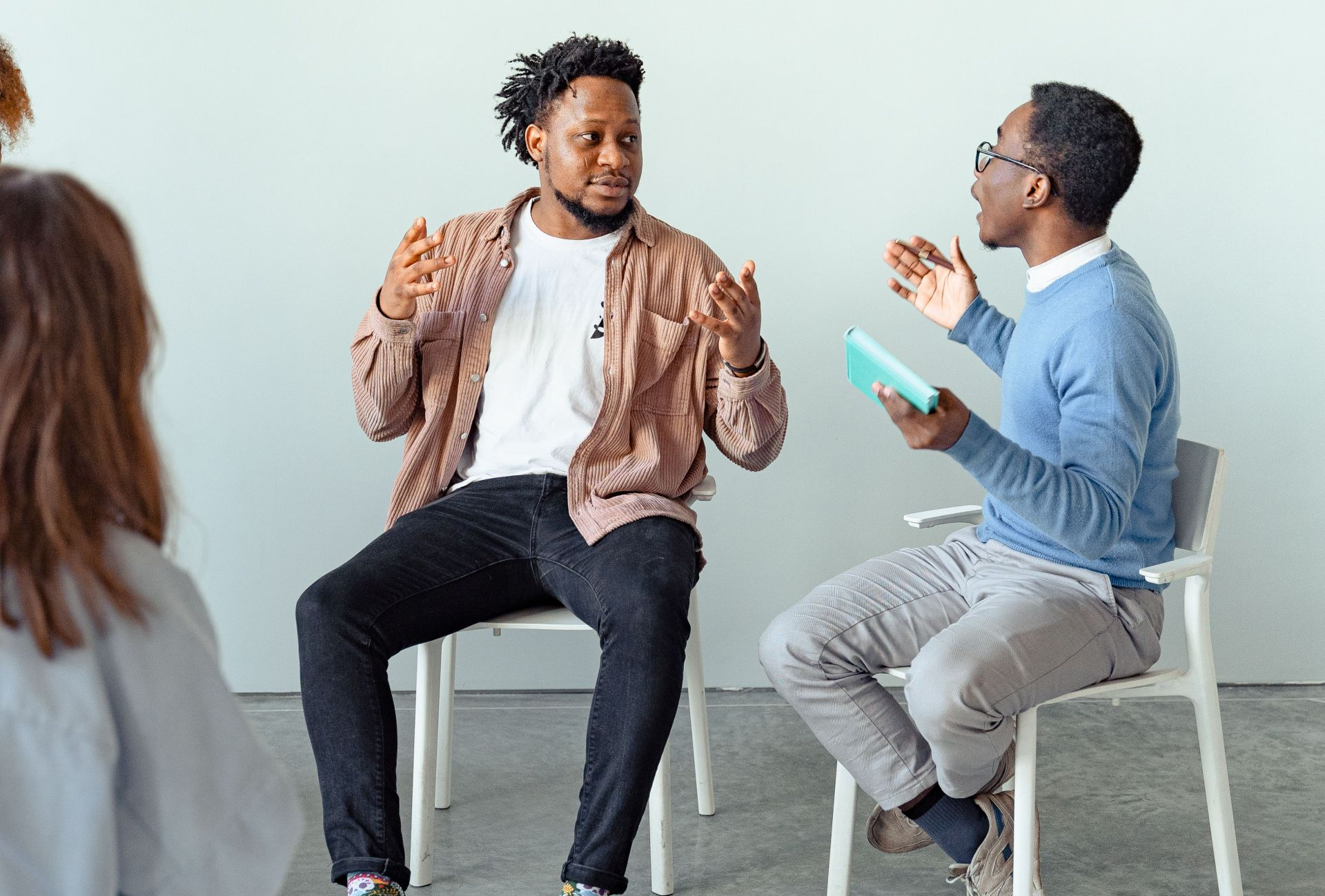
When we bring these principles into therapeutic work, they become powerful tools for healing. Many clients arrive in therapy carrying stories about being “too much,” “not enough,” or “bad at doing things right.” Improv gently disrupts those narratives. In an improv-informed session or group, there is no “right.” There is only what’s emerging in the moment. A client’s current narrative isn’t judged, it is received, expanded, and woven into the shared experience. That alone can be transformative.
Improv also supports nervous system regulation. Because it invites play, curiosity, and embodied engagement, it helps people shift out of hypervigilance or shutdown and into states of connection. The exercises are gentle at first, perhaps mirroring a partner’s movements, building a story one word at a time, or pretending to pass an imaginary object around a circle but each one strengthens the muscles of attunement, flexibility, and co-regulation. For trauma survivors, neurodivergent folks, and anyone who has learned to mask or monitor themselves constantly, this can feel like a breath of fresh air.
Where improv becomes especially powerful is in how easily it integrates with other therapeutic modalities:
• Internal Family Systems (IFS): Improv offers a playful way to externalize and explore parts. A client might embody a protective part through movement or voice, while another group member “Yes, Ands” that part’s needs. This can lower defensiveness and help clients access curiosity and compassion toward their internal system.
• Somatic and body-based therapies: Many improv warm-ups such as mirroring, shapeshifting, passing energy around a circle, invite clients to notice sensations, impulses, and the way they physically exist in the world. These exercises help people practice interoception, proprioception, and co-regulation without the pressure of verbal processing.
• Narrative therapy: Improv is storytelling in motion. Techniques like “story-building one sentence at a time” or “changing the ending” allow clients to experiment with alternative narratives, rehearse new identities, loosen the grip of old identities, and externalize the problem in a dynamic way.
• Dialectical Behaviour Therapy (DBT): Both approaches train people to stay grounded in the moment, respond rather than react, and tolerate uncertainty, with a shared emphasis on presence, flexibility, and relational attunement. core DBT skills that map naturally onto improv’s “Yes, And” mindset. Improv exercises strengthen emotional regulation, distress tolerance, and interpersonal effectiveness by inviting participants to notice internal cues, co create with others, and practice new behaviours in a low stakes, playful environment. In this way, improv becomes an experiential pathway into DBT’s core principles, helping clients embody skills rather than only talk about them.
• Play therapy and child/youth work: Improv aligns naturally with developmental needs for imagination, experimentation, and co-created worlds. Games like “What Are You Doing?” or “Magic Door” help kids practice emotional expression, social skills, and frustration tolerance.
• Group therapy: Improv is inherently relational. It builds cohesion, trust, and shared vulnerability. Groups learn to take risks together, celebrate each other’s ideas, and repair moments of misattunement in real time.
Another reason improv works so well in therapeutic contexts is that it honours multiple ways of being. Not everyone processes the world through language. Not everyone feels safe sitting still and talking about their feelings. Improv offers alternative pathways: movement, metaphor, character, rhythm, imagination. It lets people try on different roles, experiment with new responses, and explore parts of themselves that may not have had space to emerge. In this way, improv aligns beautifully with trauma-informed and identity-affirming practice. It centres consent, collaboration, and choice. It welcomes the whole person including their creativity, their awkwardness, their humour, and their contradictions.
As an art form, improv teaches us that creativity is not a rare talent but a shared human capacity. As a therapy modality, it reminds us that healing doesn’t always have to be heavy. Sometimes it can be joyful, silly, surprising, or delightfully weird. And sometimes the most profound shifts happen not when we analyze our stories, but when we step into a moment with openness and let something new unfold.
Shannon Hardy (they/them) is a registered clinical social worker (MSW, RSW) and certified Geek and Improv Therapist whose practice blends compassion-based, narrative practice with fandom-inspired therapeutic engagement. Based in Kjipuktuk (Halifax), Nova Scotia, Shannon is non-binary, neurodivergent, and deeply committed to creating affirming spaces for 2SLGBTQ+ and neurodivergent individuals, especially those navigating life transitions, trauma, and identity exploration.
Shannon is also a trainer and consultant in trauma-informed practices and approaches, a researcher with the University of Victoria, and the recipient of the Sexellence Award from Sexual Health Nova Scotia. Shannon’s improv team is called Live Action Reboot and you can rewatch their improv performances on Spontaneity Improv’s YouTube channel.
You can connect with Shannon on their website hardyconsulting.ca