
Geneva Symposium Marks the Launch of a Global Movement in Trauma-Informed Creative Care
Jun 2
Geneva, Switzerland — May 30, 2026 — The Founding Symposium “Trauma-Informed Futures: A Global Movement in Creative Care” brought together an international community of art therapists, creative arts therapists, psychologists, educators, researchers, and humanitarian-minded practitioners for a landmark day of learning, dialogue, and collective vision-building in Geneva.
Held at the Maison Internationale des Associations and accessible online, the symposium positioned creative arts therapies as essential contributors to the future of trauma-informed care. Convened in a city known for humanitarian dialogue and international cooperation, the gathering emphasized that trauma-informed practice is not only a clinical concern, but also an ethical, educational, cultural, and social responsibility.
The day opened with remarks from the organizers, Camilla Mele and Carmen Oprea, who framed the symposium as a foundational step toward a broader international movement. Their message was clear: the field of creative care must move toward collaboration, shared standards, culturally responsive practice, and sustainable systems of support for practitioners and communities.
Held at the Maison Internationale des Associations and accessible online, the symposium positioned creative arts therapies as essential contributors to the future of trauma-informed care. Convened in a city known for humanitarian dialogue and international cooperation, the gathering emphasized that trauma-informed practice is not only a clinical concern, but also an ethical, educational, cultural, and social responsibility.
The day opened with remarks from the organizers, Camilla Mele and Carmen Oprea, who framed the symposium as a foundational step toward a broader international movement. Their message was clear: the field of creative care must move toward collaboration, shared standards, culturally responsive practice, and sustainable systems of support for practitioners and communities.
Cathy Malchiodi Opens the Symposium with a Sensory-Based Vision for Trauma Recovery
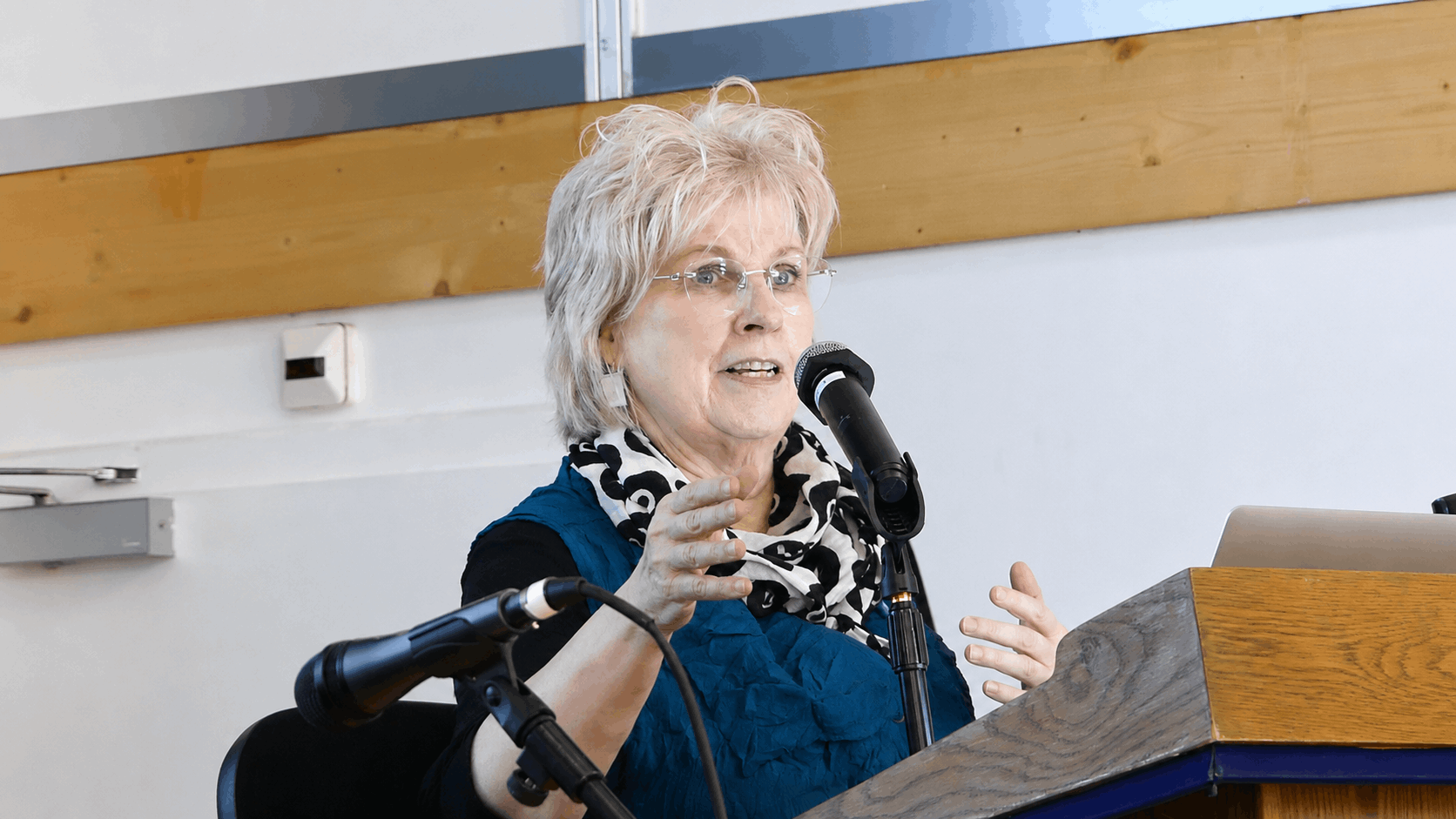
The keynote presentation was delivered by Cathy Malchiodi, PhD, LPCC, LPAT, ATR-BC, REAT, a leading figure in trauma-informed expressive arts therapy. Her workshop, “Expressive Therapies for Trauma-Informed Practice,” invited participants to rethink trauma recovery beyond verbal processing alone.
Drawing from her Restorative Embodiment framework, Malchiodi explored how trauma affects sensory processing, regulation, presence, and connection. She emphasized the role of the vestibular, proprioceptive, and interoceptive systems in helping practitioners understand how the body carries and responds to traumatic experience.
The keynote highlighted art-making, movement, sound, and storytelling as ways to support bottom-up regulation, re-establish mind–body integration, and restore a felt sense of safety. Rather than presenting creativity as an optional addition to therapy, Malchiodi positioned expressive practice as a central pathway for resilience, agency, and embodied awareness.
Her contribution set the tone for the day: trauma-informed creative care must be grounded in neuroscience, clinical wisdom, ethical sensitivity, and the lived reality of the body.
Drawing from her Restorative Embodiment framework, Malchiodi explored how trauma affects sensory processing, regulation, presence, and connection. She emphasized the role of the vestibular, proprioceptive, and interoceptive systems in helping practitioners understand how the body carries and responds to traumatic experience.
The keynote highlighted art-making, movement, sound, and storytelling as ways to support bottom-up regulation, re-establish mind–body integration, and restore a felt sense of safety. Rather than presenting creativity as an optional addition to therapy, Malchiodi positioned expressive practice as a central pathway for resilience, agency, and embodied awareness.
Her contribution set the tone for the day: trauma-informed creative care must be grounded in neuroscience, clinical wisdom, ethical sensitivity, and the lived reality of the body.
Ralph Erich Schmidt Bridges Psychotraumatology, Emotion-Focused Therapy, and Art Therapy Elements
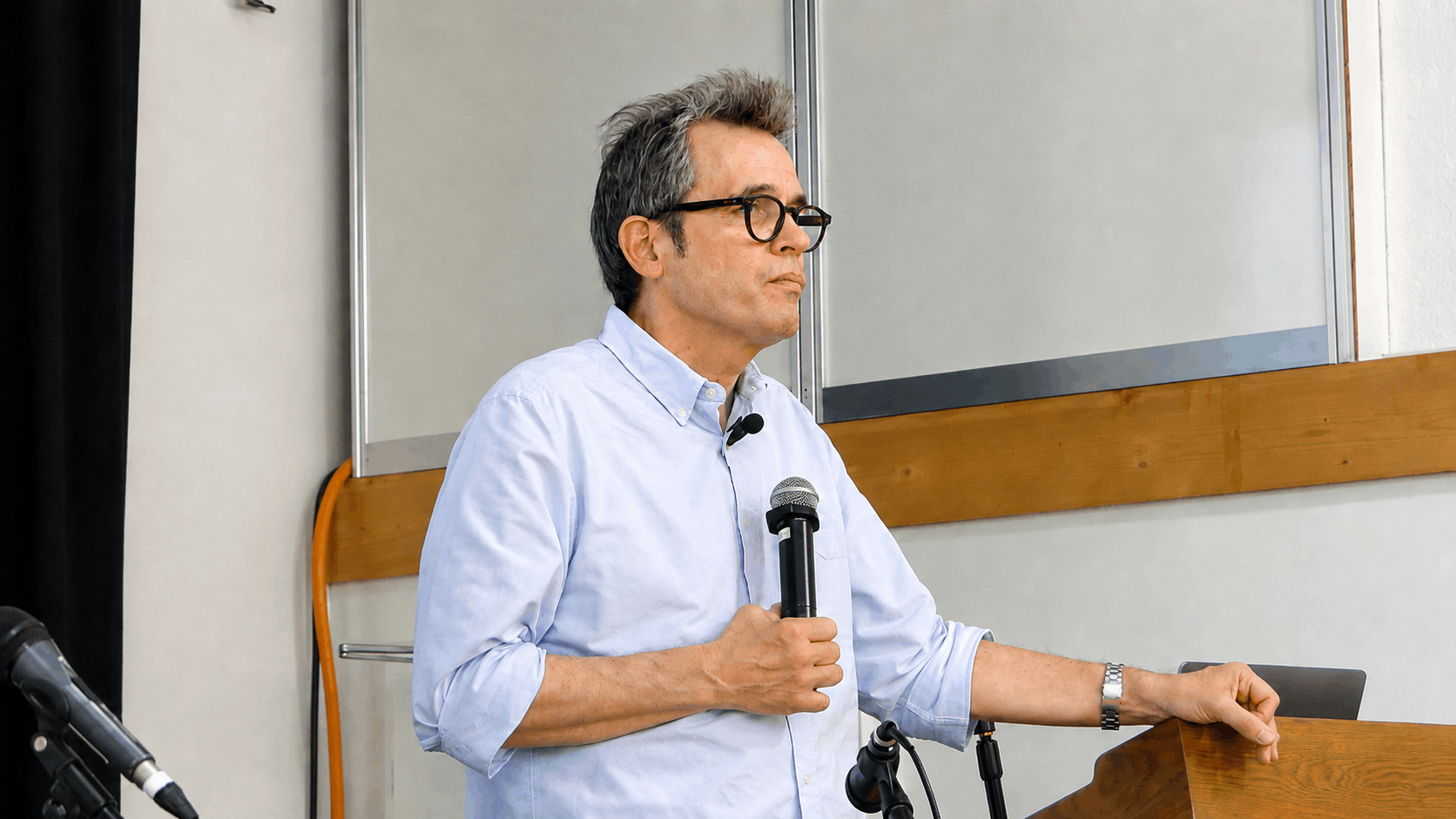
Following the poster presentations and lunch break, Ralph Erich Schmidt, PhD, Adjunct Professor of Clinical Psychology at the University of Geneva and psychotherapist at the Psychiatric University Hospital of Zurich, presented “Emotional Transformation: A Key Mechanism in Trauma Therapy.”
Schmidt traced major developments in psychotraumatology and discussed emotional transformation as a central mechanism of change in trauma therapy. His presentation connected evidence-based trauma approaches with the principles of Emotion-Focused Therapy, showing how emotional processing can become a bridge to expressive and arts-based interventions.
Schmidt traced major developments in psychotraumatology and discussed emotional transformation as a central mechanism of change in trauma therapy. His presentation connected evidence-based trauma approaches with the principles of Emotion-Focused Therapy, showing how emotional processing can become a bridge to expressive and arts-based interventions.
Through clinical examples, Schmidt demonstrated how drawings and creative materials may support therapeutic work when words alone are insufficient. His presentation underscored a key idea of the symposium: creative arts therapies can deepen trauma work by engaging emotional, somatic, and symbolic dimensions of experience.
Couldn’t attend the symposium live, or want to revisit the presentations at your own pace? The Home Study Package offers on-demand online access to all symposium presentations, allowing you to deepen your learning, reflect on the speakers’ insights, and earn continuing education credits from anywhere.
Paola Luzzatto and Alessandra Agnese Present TT-AT Across Cultural and Clinical Contexts
The afternoon continued with Paola Luzzatto, PhD, and Alessandra Agnese, MA, who presented “Adapting Trauma Treatment through Art Therapy Protocol (TT-AT) Across Contexts.”
Their presentation introduced the Trauma Treatment through Art Therapy protocol as a structured, culturally responsive approach to trauma care through creative processes. The protocol emphasizes safety, sensory regulation, non-verbal expression, and the restoration of agency.
Luzzatto and Agnese discussed the protocol’s development and implementation in Tanzania, including clinical applications with PTSD and complex PTSD, before turning to its adaptation in European contexts. Their session highlighted both the promise and responsibility of transferring trauma-informed methods across cultures.
A central message emerged from their work: trauma-informed art therapy must be adaptable without becoming generic. It must remain sensitive to place, culture, vulnerability, training conditions, and the relational context in which care is delivered.
Their presentation introduced the Trauma Treatment through Art Therapy protocol as a structured, culturally responsive approach to trauma care through creative processes. The protocol emphasizes safety, sensory regulation, non-verbal expression, and the restoration of agency.
Luzzatto and Agnese discussed the protocol’s development and implementation in Tanzania, including clinical applications with PTSD and complex PTSD, before turning to its adaptation in European contexts. Their session highlighted both the promise and responsibility of transferring trauma-informed methods across cultures.
A central message emerged from their work: trauma-informed art therapy must be adaptable without becoming generic. It must remain sensitive to place, culture, vulnerability, training conditions, and the relational context in which care is delivered.
Suzanne Haeyen Advances the Role of Research in Art Therapy
Suzanne Haeyen, PhD, Professor of Arts and Psychomotor Therapies in Health Care and a leading researcher in the Netherlands, contributed a strong research-based perspective to the symposium.
Suzanne Haeyen, PhD, Professor of Arts and Psychomotor Therapies in Health Care and a leading researcher in the Netherlands, contributed a strong research-based perspective to the symposium. Her work includes research on Trauma-Focused Art Therapy, an intervention developed by Karin Alice Schouten for people affected by psychological trauma. Emerging findings suggest that this approach may help reduce PTSD and depressive symptoms while supporting emotional articulation, resilience, self-esteem, and positive mental health.
Her presence also emphasized the importance of developing a stronger evidence base for creative arts therapies while preserving their experiential, relational, and embodied character.
Suzanne Haeyen, PhD, Professor of Arts and Psychomotor Therapies in Health Care and a leading researcher in the Netherlands, contributed a strong research-based perspective to the symposium. Her work includes research on Trauma-Focused Art Therapy, an intervention developed by Karin Alice Schouten for people affected by psychological trauma. Emerging findings suggest that this approach may help reduce PTSD and depressive symptoms while supporting emotional articulation, resilience, self-esteem, and positive mental health.
Her presence also emphasized the importance of developing a stronger evidence base for creative arts therapies while preserving their experiential, relational, and embodied character.
Marcia Plevin Brings Dance/Movement Therapy into Pediatric Trauma Care
In the vignette presentation “Time Out of Time,” Marcia Plevin, MA, BC-DMT, explored the traumatic impact of pediatric cancer diagnosis and hospitalization on children and families.
Drawing on dance/movement therapy, movement analysis, and developmental perspectives, Plevin presented the therapist’s embodied presence as a therapeutic environment. Her clinical illustration showed how movement, play, and attunement can support emotional expression, regulation, and connection in highly medicalized settings.
The presentation expanded the symposium’s focus beyond art therapy alone, demonstrating how the broader creative arts therapies can respond to trauma in settings where vulnerability, uncertainty, and loss of agency are deeply present.
Drawing on dance/movement therapy, movement analysis, and developmental perspectives, Plevin presented the therapist’s embodied presence as a therapeutic environment. Her clinical illustration showed how movement, play, and attunement can support emotional expression, regulation, and connection in highly medicalized settings.
The presentation expanded the symposium’s focus beyond art therapy alone, demonstrating how the broader creative arts therapies can respond to trauma in settings where vulnerability, uncertainty, and loss of agency are deeply present.
Ines Testoni Examines Death, Grief, Trauma, and Creative Arts Education
Ines Testoni, PhD, Professor of Social Psychology at the University of Padua, presented “Trauma-Informed Death/Grief Education Through Creative Arts Therapies and Techniques.”
Her presentation addressed the ways contemporary societies often distance themselves from death, dying, and grief, leaving individuals, caregivers, and professionals underprepared for loss and mortality. Testoni explored how creative arts therapies and techniques can support death and grief education as forms of prevention, emotional literacy, resilience, compassion, and existential awareness.
She also introduced the relevance of symbolic action, psychodramatic approaches, and creative processes in helping individuals remain emotionally present without becoming overwhelmed. Her contribution connected trauma-informed care with thanatology, social psychology, and end-of-life education, widening the field’s ethical and educational horizon.
Her presentation addressed the ways contemporary societies often distance themselves from death, dying, and grief, leaving individuals, caregivers, and professionals underprepared for loss and mortality. Testoni explored how creative arts therapies and techniques can support death and grief education as forms of prevention, emotional literacy, resilience, compassion, and existential awareness.
She also introduced the relevance of symbolic action, psychodramatic approaches, and creative processes in helping individuals remain emotionally present without becoming overwhelmed. Her contribution connected trauma-informed care with thanatology, social psychology, and end-of-life education, widening the field’s ethical and educational horizon.
Round Table Explores Trauma-Informed Education in Creative Therapies
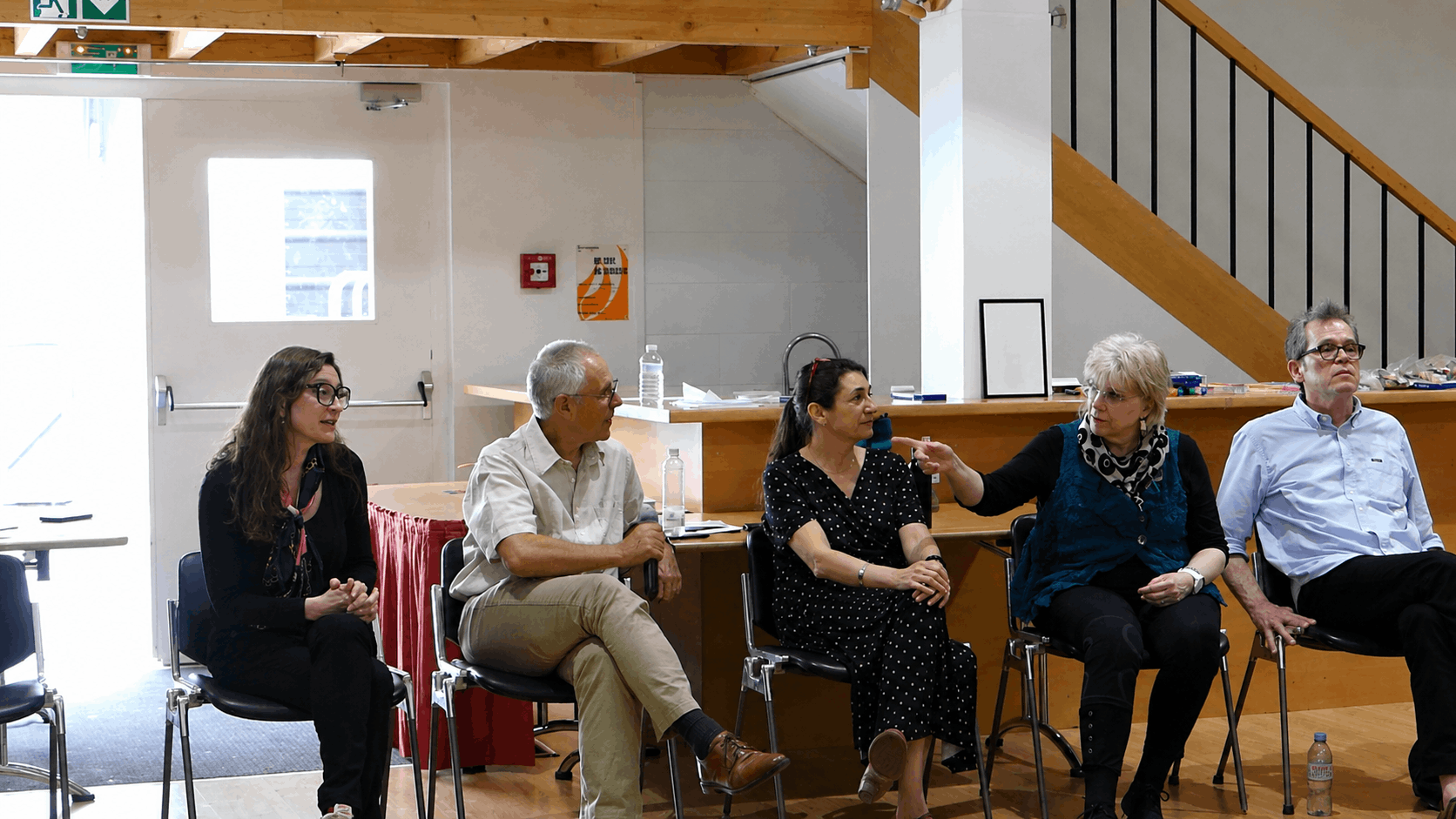
The symposium concluded with a round table on “Trauma-Informed Education in Creative Therapies,” moderated by Camilla Mele and Carmen Oprea and featuring Jacques Stitelmann and Cathy Malchiodi.
The discussion examined how trauma-informed theory and practice can be meaningfully integrated into graduate education, professional training, continuing education, and community-based learning. Key themes included curriculum design, embodied pedagogy, experiential learning, ethics, supervision, and the challenges of preparing practitioners to work responsibly with trauma across diverse contexts.
Jacques Stitelmann, PhD, artist, psychologist, psychotherapist, art therapist, and founder of l’Atelier in Geneva, brought a local and deeply practice-based perspective to the discussion. Drawing on his research and clinical experience, he reflected on the sensitivity required in trauma-informed practice, particularly when working with areas of experience that may feel blocked or inaccessible because of trauma. He emphasized the importance of engaging the person’s remaining vital, creative, and responsive capacities as a way to support restoration and renewed functioning. Stitelmann also highlighted the role of the art therapist as a sensitive holder of fragility, underlining the need for this relational and ethical responsibility to be explicitly taught within university training.
Camilla Mele, PhD, contributed her expertise in trauma-informed practice in humanitarian settings, art therapy education, and EU-funded projects. As creator of a trauma-informed post-graduate training at University of Padua, she spoke about the necessity to expand education in this domain at an international scale.
Carmen Oprea, MA, MFA, ATR-BC, RCAT, brought a perspective grounded in clinical practice, research, supervision, cultural responsiveness, and international community building. As the founder of the World Art Therapy Conference and a continuing education provider, she raised important questions about professional education led by recognized voices outside traditional academic settings.
The discussions gravitated around the strength of arts therapies fields and the confidence the practitioners, as well and defining clearly what these professions are. The symposium delegates were bringing perspectives from their practices and giving feedback on the perceived solidity of the field among potential clients and other professional, emphasizing on the need to be united and promote these services as a community, with a stronger voice.
Together, the round table affirmed that trauma-informed education must be more than a set of techniques. It must prepare practitioners to work with the body, the image, the group, the community, and the social systems that shape trauma and recovery.
The discussion examined how trauma-informed theory and practice can be meaningfully integrated into graduate education, professional training, continuing education, and community-based learning. Key themes included curriculum design, embodied pedagogy, experiential learning, ethics, supervision, and the challenges of preparing practitioners to work responsibly with trauma across diverse contexts.
Jacques Stitelmann, PhD, artist, psychologist, psychotherapist, art therapist, and founder of l’Atelier in Geneva, brought a local and deeply practice-based perspective to the discussion. Drawing on his research and clinical experience, he reflected on the sensitivity required in trauma-informed practice, particularly when working with areas of experience that may feel blocked or inaccessible because of trauma. He emphasized the importance of engaging the person’s remaining vital, creative, and responsive capacities as a way to support restoration and renewed functioning. Stitelmann also highlighted the role of the art therapist as a sensitive holder of fragility, underlining the need for this relational and ethical responsibility to be explicitly taught within university training.
Camilla Mele, PhD, contributed her expertise in trauma-informed practice in humanitarian settings, art therapy education, and EU-funded projects. As creator of a trauma-informed post-graduate training at University of Padua, she spoke about the necessity to expand education in this domain at an international scale.
Carmen Oprea, MA, MFA, ATR-BC, RCAT, brought a perspective grounded in clinical practice, research, supervision, cultural responsiveness, and international community building. As the founder of the World Art Therapy Conference and a continuing education provider, she raised important questions about professional education led by recognized voices outside traditional academic settings.
The discussions gravitated around the strength of arts therapies fields and the confidence the practitioners, as well and defining clearly what these professions are. The symposium delegates were bringing perspectives from their practices and giving feedback on the perceived solidity of the field among potential clients and other professional, emphasizing on the need to be united and promote these services as a community, with a stronger voice.
Together, the round table affirmed that trauma-informed education must be more than a set of techniques. It must prepare practitioners to work with the body, the image, the group, the community, and the social systems that shape trauma and recovery.
Poster Presentations: Highlight Emerging Research and Practice
The symposium also included poster presentations that expanded the day’s focus through emerging projects and reflective practices. Topics included creative approaches with young adults experiencing psychological distress, migration and embodied belonging, culturally responsive music therapy, symbolic creativity, somatic body mapping in pregnancy, and ritual-based approaches to grief.
These presentations reflected the growing diversity of trauma-informed creative arts practice. They also demonstrated the need for research spaces where clinicians, students, artists, and scholars can share developing work, especially in areas where conventional treatment models may not fully reach lived experience.
These presentations reflected the growing diversity of trauma-informed creative arts practice. They also demonstrated the need for research spaces where clinicians, students, artists, and scholars can share developing work, especially in areas where conventional treatment models may not fully reach lived experience.
A Foundational Step for Trauma-Informed Creative Care
By the end of the day, the Geneva symposium had established more than a professional meeting. It created a platform for a field in motion: one seeking stronger collaboration, ethical coherence, culturally responsive training, and international exchange.
Across the presentations, several ideas returned again and again: trauma is carried through the body as well as the mind; creative expression can support regulation, connection, agency, and meaning-making; practitioners need education that is experiential and embodied; and the future of care must be collaborative rather than competitive.
The Founding Symposium closed with a shared sense that trauma-informed creative care is not a niche practice, but a necessary response to the challenges of the present moment. In Geneva, speakers and participants helped rehearse the future of a movement: one grounded in creativity, research, ethics, and humanitarian commitment.
Across the presentations, several ideas returned again and again: trauma is carried through the body as well as the mind; creative expression can support regulation, connection, agency, and meaning-making; practitioners need education that is experiential and embodied; and the future of care must be collaborative rather than competitive.
The Founding Symposium closed with a shared sense that trauma-informed creative care is not a niche practice, but a necessary response to the challenges of the present moment. In Geneva, speakers and participants helped rehearse the future of a movement: one grounded in creativity, research, ethics, and humanitarian commitment.
About Trauma-Informed Futures:
“Trauma-Informed Futures: A Global Movement in Creative Care” is an international symposium dedicated to advancing trauma-informed arts therapies through practice, research, education, and cross-sector collaboration. The 2026 founding event in Geneva gathered leading voices in art therapy, expressive arts therapy, psychology, dance/movement therapy, death studies, education, and community-based creative care.
“Trauma-Informed Futures: A Global Movement in Creative Care” is an international symposium dedicated to advancing trauma-informed arts therapies through practice, research, education, and cross-sector collaboration. The 2026 founding event in Geneva gathered leading voices in art therapy, expressive arts therapy, psychology, dance/movement therapy, death studies, education, and community-based creative care.
Subscribe to our newsletter
Thank you! You are now subscribed to our newsletter and will receive news, promotions of new events, free gifts, etc. Stay tuned!
Pages
Creative Therapies Events Inc. operates under the brand name Creative Arts Therapies Events which may be used, along with our logo, for all our educational and promotional materials, both in print and electronic formats, including for advertising certified credits where applicable.
Copyright © 2026, Creative Therapies Events Inc.
Copyright © 2026, Creative Therapies Events Inc.
Contact us at contact@artstherapies.org
Write your awesome label here.
Thank you for subscribing to our event!
You are now registered to our free event and you will receive in your inbox updates about the program, presentations, discounts, and much more. Stay tunned!
Call for papers:
If you have research or clinical expertise related to the topic of this event, please contact us to be a speaker for this event. Write to us at contact@artstherapies.org for more details.
Thank you!
CATE Team
Subscribe to our newsletter now!
Get weekly updates on live streams, news and more right in your mailbox.
Thank you!
Created with